
Why Is My Teen Breaking Out?
Understanding Teenager’s Acne
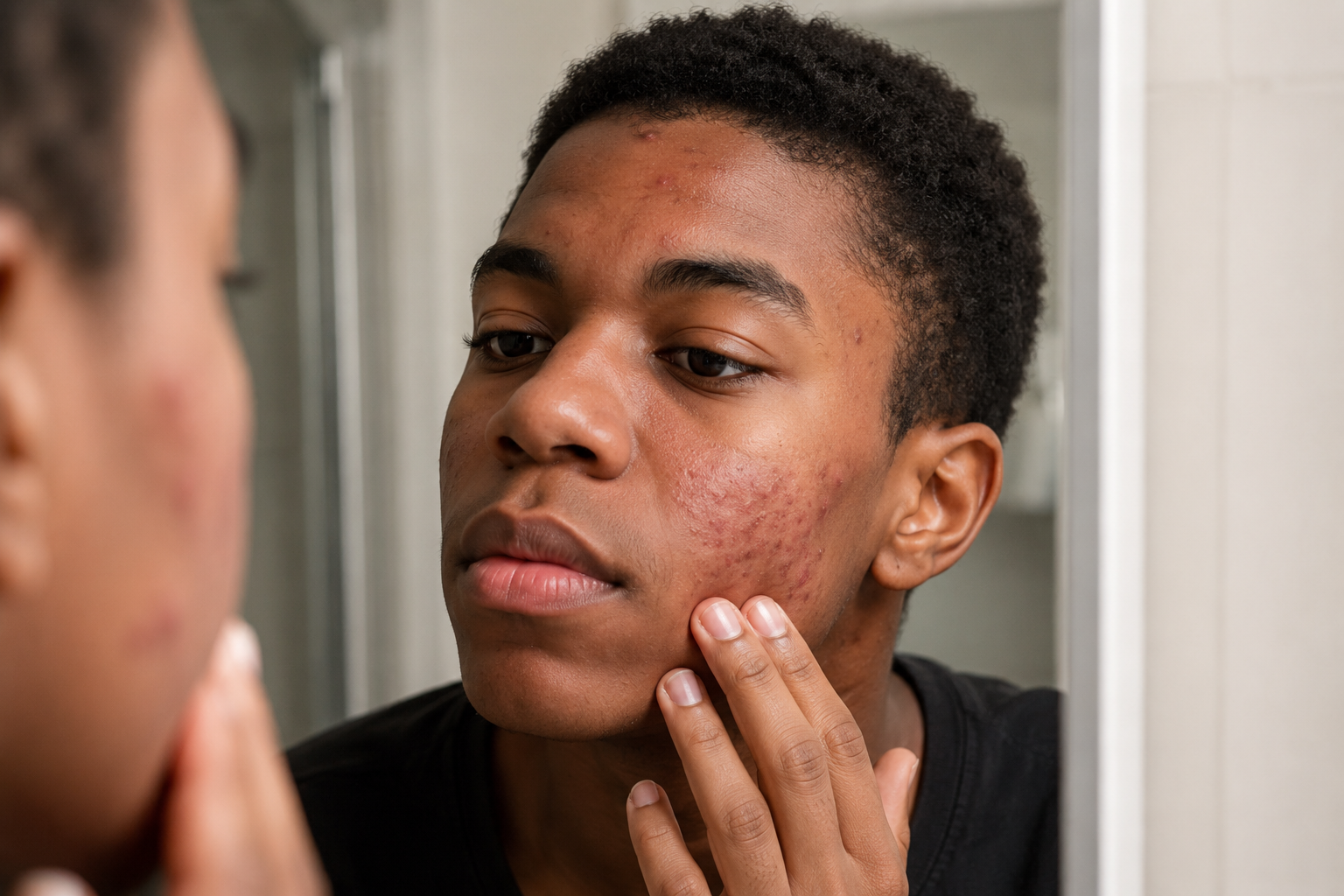
If you're a parent watching your teenager stare into the mirror with frustration, or a teen who's tired of hearing "it's just hormones, it'll pass" — you're not wrong to want real answers. Adolescent acne is one of the most common skin concerns dermatologists see, and it deserves more than a shrug.
It's Not Just "Normal Teenage Skin”
During puberty, rising androgen levels signal the skin's sebaceous glands to produce more oil (sebum) than before. That extra oil, combined with dead skin cells, can clog pores. Add in the acne-related bacteria that naturally live on skin, and you get the inflammation that shows up as whiteheads, blackheads, papules, or, in more severe cases, cysts.
This is a biological process, not a hygiene failure. Most teens can't "wash away" hormonal acne, no matter how often they cleanse.
The Emotional Side Nobody Talks About
Acne during adolescence coincides with a period when self-image is already fragile. Studies consistently link teen acne to lower self-esteem, social withdrawal, and anxiety. Taking a teenager's breakouts seriously isn't vanity — it's supporting their confidence during a formative stage of life.
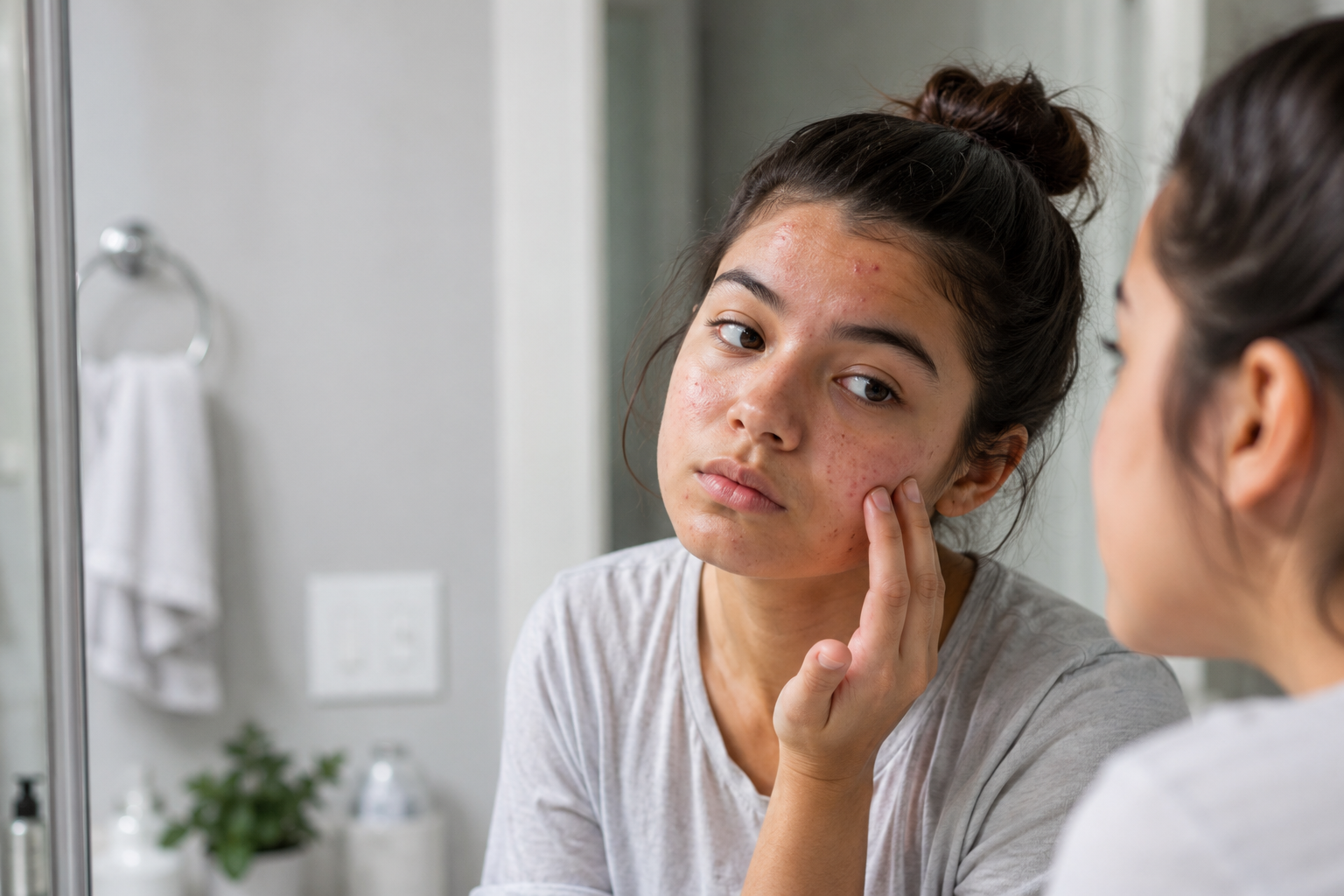
The Emotional Side Nobody Talks About
Acne during adolescence coincides with a period when self-image is already fragile.
Studies consistently link teen acne to lower self-esteem, social withdrawal, and anxiety. Taking a teenager's breakouts seriously isn't vanity — it's supporting their confidence during a formative stage of life.
What Actually Helps (and What Doesn't)
A consistent, gentle routine beats an aggressive one — over-scrubbing damages the skin barrier and can make breakouts worse.
Non-comedogenic (won't clog pores) products for skin, hair, and sunscreen matter more than most teens realize.
Trendy "remedies" from social media are not a substitute for guidance backed by clinical evidence.
Picking or popping increases the risk of scarring and dark marks that can outlast the breakout itself.
When to See a Dermatologist
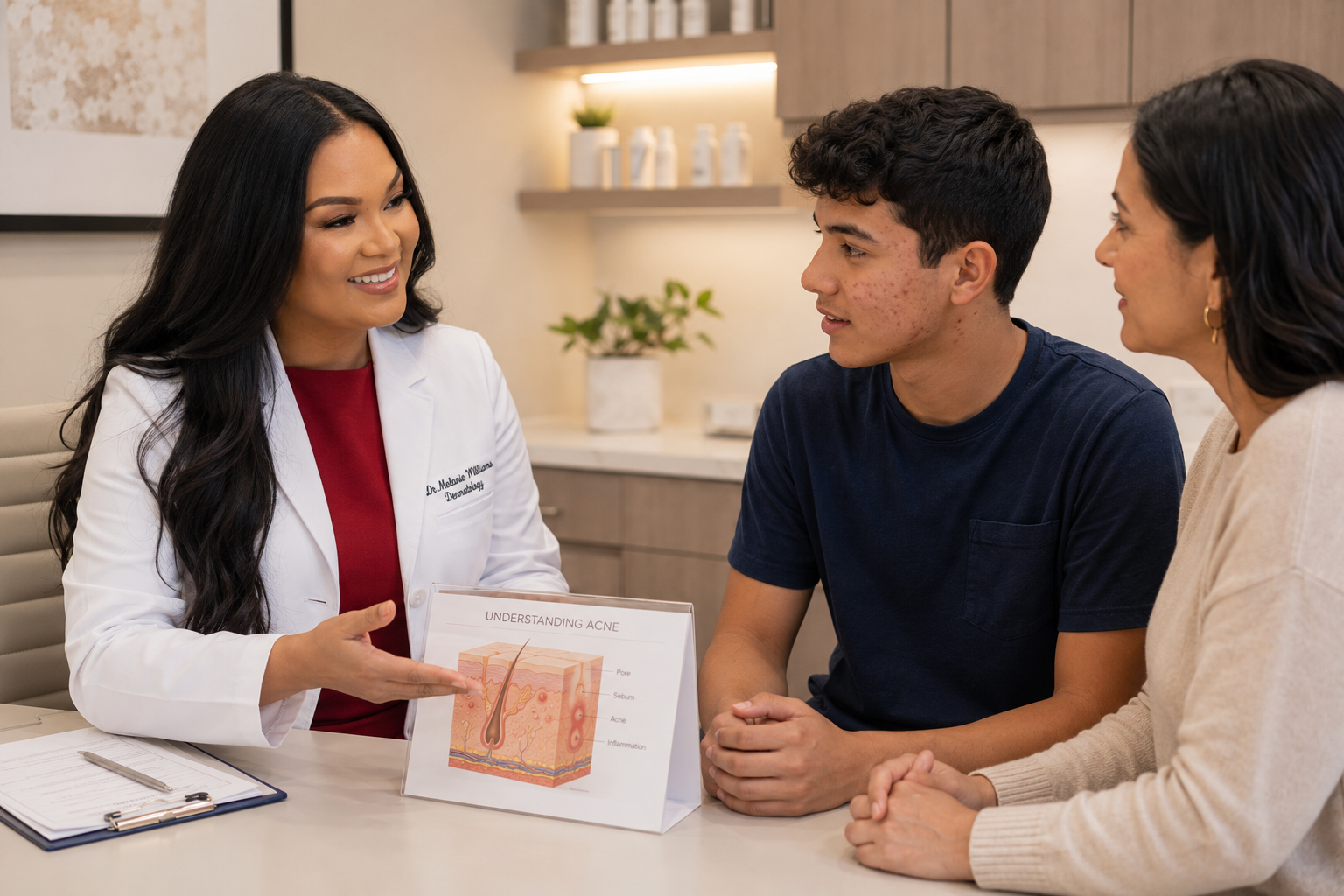
If breakouts are persistent, painful, cystic, or starting to leave marks or scars, it's time for a professional evaluation rather than more trial and error. A board-certified dermatologist can identify what type of acne is present and build a plan suited to a teenager's specific skin — not a generic routine borrowed from the internet.
At Florida Institute of Dermatology, our team works with adolescent patients and their families to build acne plans that are effective, age-appropriate, and easy to stick with.
Ready to see what an in-clinic acne plan could do for you?