
Why Am I Still Breaking Out?
Understanding Adult Hormonal Acne & Stress Triggers
Adult Acne Is Different From Teen Acne
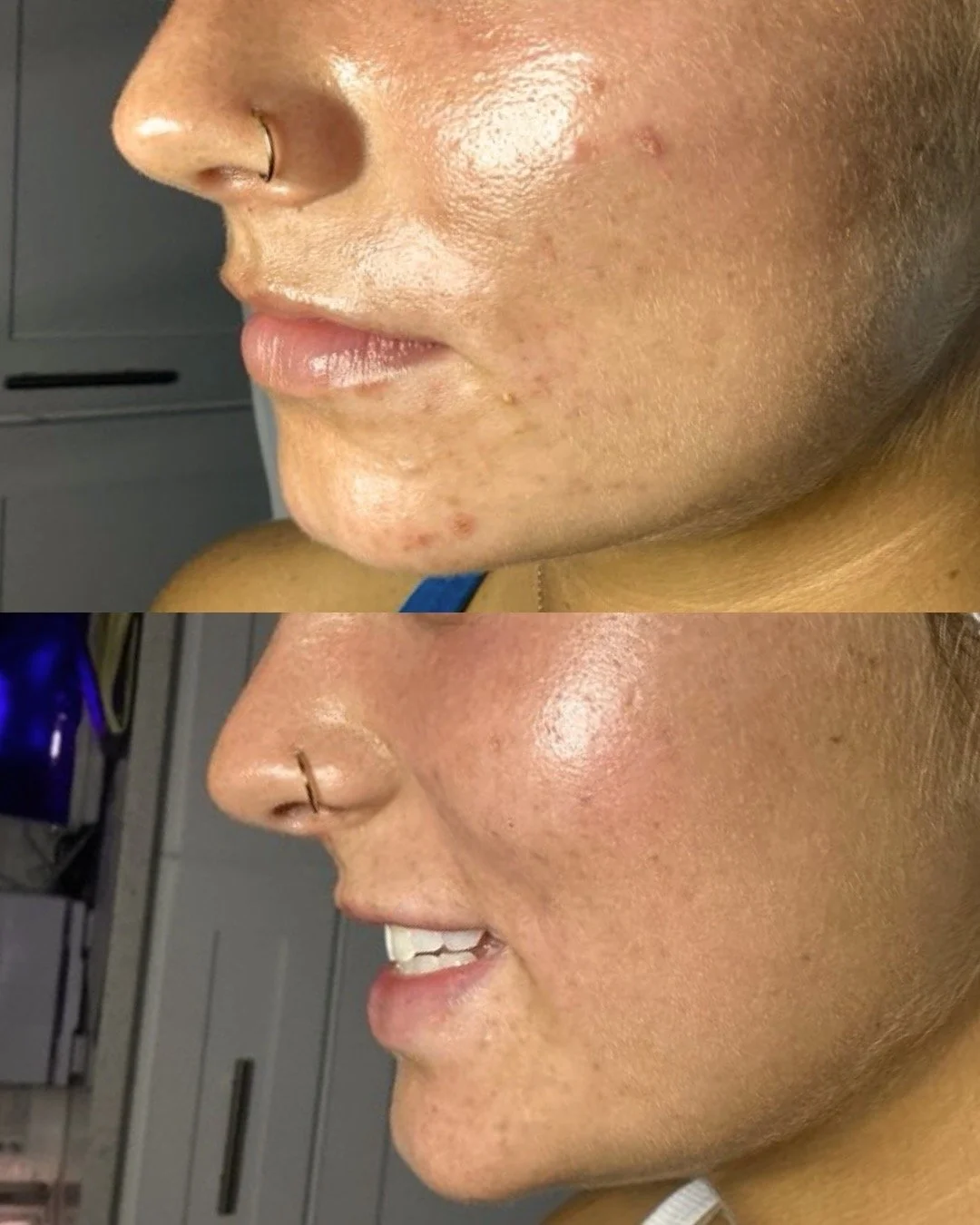
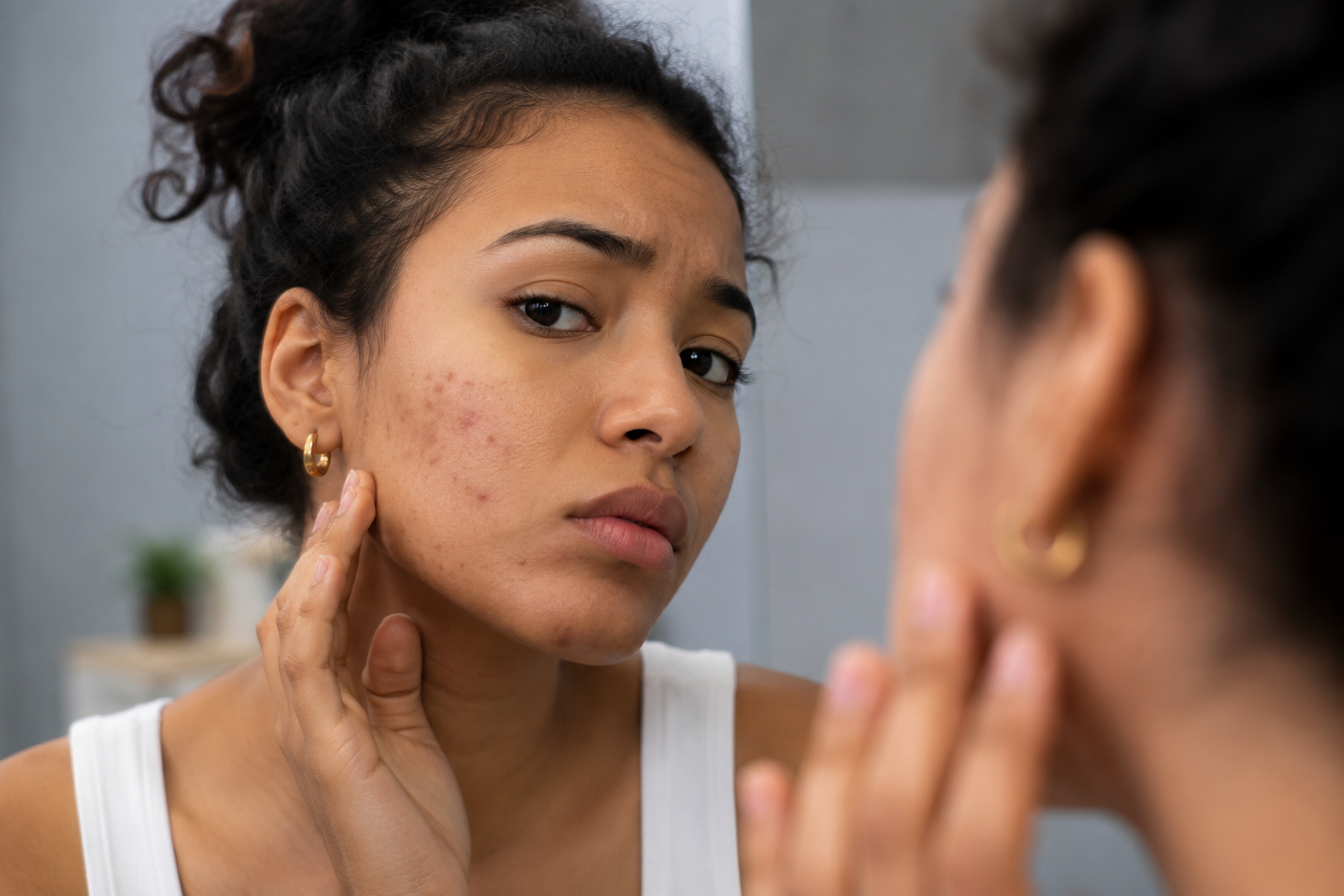
While adolescent acne tends to concentrate on the forehead, nose, and cheeks (the T-zone), adult acne — especially in women — often shows up along the jawline, chin, and lower face. This pattern is a strong clue that hormonal fluctuations are involved, whether tied to the menstrual cycle, pregnancy, perimenopause, or a condition like PCOS.
The Stress-Skin Connection
Cortisol, the body's primary stress hormone, does more than affect mood and sleep — it can trigger the sebaceous glands to produce more oil, thicken the outer skin layer, and slow the skin's ability to repair itself.
That's why breakouts often cluster around high-pressure weeks: a demanding work deadline, travel, poor sleep, or emotional strain.

You outgrew your teenage years, but not your breakouts. If you're dealing with acne well into adulthood, you're far from alone — and the causes are often different from what drove your skin trouble as a teen.
Other Common Triggers Worth Ruling Out
Comedogenic skincare, haircare, or makeup products that quietly clog pores over time.
Certain medications and supplements.
Diet patterns — particularly high-glycemic and dairy-heavy diets, in some individuals.
Friction and buildup from masks, helmets, or phone screens against the skin.
Why "It'll Just Go Away" Isn't the Right Approach
Adult acne tends to be more stubborn and more likely to scar than teenage acne, partly because adult skin cell turnover slows with age. Waiting it out often means living with the breakout longer — and risking marks that stick around after it clears.
Whatever it is, the way you tell your story online can make all the difference.
The good news: because adult acne usually has identifiable hormonal or lifestyle triggers, a dermatologist can often pinpoint the pattern and address it directly, instead of guessing product by product.
Ready to see what an in-clinic acne plan could do for you?